Blockchain technology, which is one of the most effective technologies of our time, is effective in many fields and nevertheless plays an important role in the health sector. The blockchain is a decentralized, distributed, and publicly traded ledger used to record transactions across many computers. They are linked together using timestamped and cryptographic hashes. These blocks are securely and immutably sealed. The chain grows continuously and new blocks are added to the end, so each new block keeps a reference (hash value) to the inside of the previous block. Shareholders, also called blockchain nodes, are organized in a peer-to-peer (P2P) network. Every node in the network has two keys. One of them is a public key used to encrypt messages sent to a node, and the other key is a private key used to decrypt messages that allow a node to read them. Thus, the public key encryption mechanism is used to ensure the consistency, irreversibility, and non-repudiation of a blockchain.
All blocks in the blockchain are linked using the one-way hash function (for example, SHA256). It also ensures the anonymity, immutability, and compactness of the block. Every transaction performed by a node is signed before being broadcast on the network for later approval. Signing a transaction using a private key ensures the authentication and integrity of a transaction.
The blockchain does decentralized data computation that ensures data reliability for modern healthcare. A user who wants to connect to the blockchain connects via a node. Each user in the system represents a node. Therefore, each node participating in the system has a copy of the blockchain. In this way, the intermediary has been eliminated and the central authority obligation is also eliminated.
Blockchain technology is developing in many areas, such as; electronic and personal health record management, remote patient management, identity management profiles integrated with the development of smart health, following up prescriptions, combating counterfeiting in drug and medical device procurement, audit of insurance reimbursement processes, health data’s (diagnosis, treatment, DNA records, lifestyle, physical activity, etc.) safe use in clinical research. This work is to systematically develop blockchain technology and existing technology in the field of health and integrate it into the health sector and provide services.
One of the areas where blockchain is considered to have great potential is healthcare. It is very important to keep the medical data of patients in health services. This data is very sensitive and a prime target for cyberattacks. Another aspect is control over data that will ideally be managed by the patient. Accessing and sharing control of patients' health data is another use case that can benefit from advanced modern technologies. Blockchain technology is highly resistant to hacks and failures and provides different methods of access control. Therefore, blockchain is a safe technology for health data.
To transform healthcare, the focus must be on managing data that can take advantage of the potential to connect different systems and improve the accuracy of EHRs (Electronic Devices). In addition to supporting blockchain technology, pharmaceutical prescriptions, procurement management, and any risk data management can be used to support access control, data sharing, and management of medical activities. Among the options that can benefit from blockchain technology; are credentials, medical billing, contract, change of medical records, clinical trials, and tracking of counterfeit medications. As blockchain-based healthcare systems will have control over patients' health records, they can increase patients’ safety and reliability of their data. These systems also help consolidate patient data and facilitate the exchange of medical records between different healthcare institutions.
The virtual card allows people to take control and securely share personal health, birth, prescription, and identity information. People can share health permits without needing to disclose the key personal data used to create identity information. People's health data is very important and must be stored in a safe environment. For this reason, the solution is based on blockchain technology; to do things in a reliable and verifiable way.
The Clysterum Virtual Card working way is given below:
To be published, the verifying person and organization must approve them.
Counterfeit drugs are a growing threat today. One of the biggest problems in the health sector is the introduction of counterfeit drugs and the lack of control over drug-based drugs. Counterfeit drugs are becoming a global problem. In 2018, there were 1750 drug fraud cases in North America happened, followed by Asia with 1426 cases.
To solve these problems, drugs need to be verified and inspected from production to delivery to the patient. With blockchain technology, verification and auditing can be done systemically. Thanks to blockchain technology, the identity of the drugs leaving the factory will be verified and time-stamped at each delivery point. Therefore, the identity of the drug can be verified and inspected from the production stage to its distribution.
During production, high-resolution digital photos of each label are taken. The image creates a labeled double by capturing unique flaws that are invisible to the naked eye but detectable by artificial intelligence. This digital double can be taken from the blockchain in case the originality of a product is questioned. Using artificial intelligence, digital double and suspect tags can be compared even if the real-world tag is damaged or dirty. This approach adds a new dimension to the use of blockchain to track and trace pharmaceutical products from the manufacturing plant to the patient.
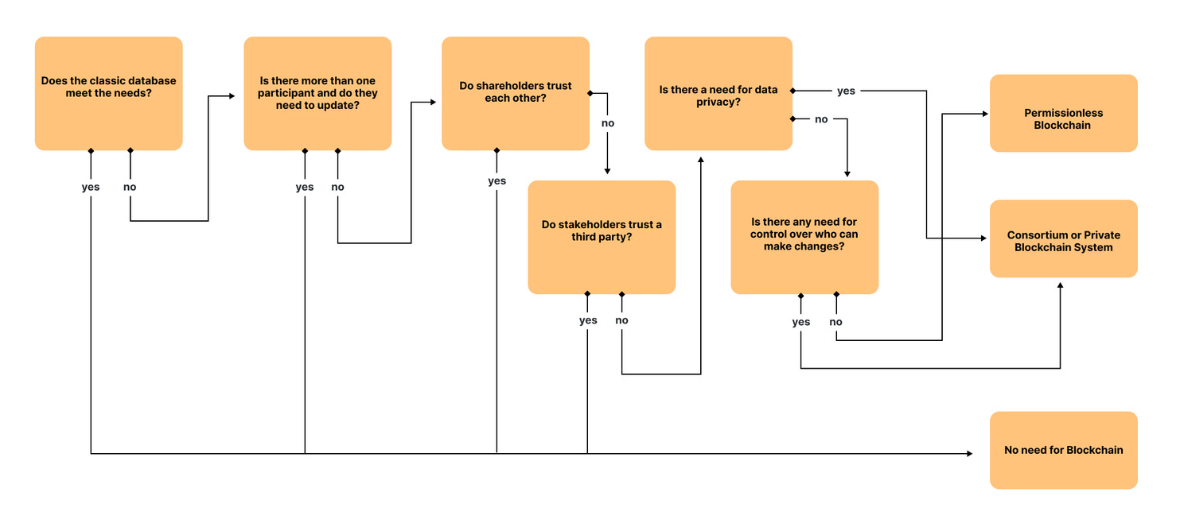
The most suitable blockchain type for personal medical data would be a special blockchain. According to the blockchain decision model, a blockchain can be used in a scenario where multiple parties that do not trust each other need to interact and exchange shared data but do not want to involve a third party (TTP).
Let's examine the blockchain in health according to the blockchain decision model:
Does the classic database meet the needs?
Databases are based on a centralized system. But blockchain works with a decentralized system. In the central environment, data is an open target and is not as resistant to attacks as blockchain. Therefore, the classical database does not meet the requirements.
Is there more than one participant? Does it need to update?
There are many stakeholders in the health sector. Each stakeholder needs to access, update, and exchange data to accomplish a set of tasks or to achieve what they want. These processes need to be reliable and controlled.
Do stakeholders trust a third party?
In the field of health, each stakeholder is responsible for processing confidential and sensitive data as a result of their work. In this context, health information and health provider can face to face with cyber-attacks, fraud, and malicious attacks. The blockchain can handle all transactions without the transparency of data sharing and the need for a third-party environment of semi-trust.
Is there a need for data privacy?
Since the blockchain creates immutable records and is very strong against attacks, data security needs to be at the highest level in the healthcare field, therefore due to its structure, data privacy will be stored in a very secure environment.
Is there any need for control over who can make changes?
In the blockchain system that will be created in the health field, it is necessary to access the ledger to be shared and the nodes that write to the ledger.
The blockchain type that will operate in the field of health must be Special Blockchain.
The blockchain system has some basic criteria and is built on these standards. These features are briefly described below.
Distributed: The most basic feature of the blockchain is that the data is not kept in one place, but is recorded, stored, and updated in a distributed manner.
Transparent: With the blockchain system, the record of data is transparent to every node and the data can be verified retrospectively. For this reason, the blockchain is considered reliable.
Independent: Thanks to the consensus structure, the node data in the blockchain system can be transferred securely, there is no need to request a center.
Unchangeable: The record added to the blockchain cannot be updated or deleted in any way, and the record is permanently stored. It is not possible to change the record, except for various types of attacks.
Identity Privacy: In the blockchain system, nodes can transfer data without specifying an identity. For this process, it is enough to know a person’s blockchain address.
Cost reduction: Unlike centralized architecture, where an advanced, complete hardware and software system is required to create the centralized server, blockchain technology uses the processing power of communication devices to reduce the cost associated with installing and maintaining large centralized servers.
Autonomy: The ability to make autonomous decisions is among the features that blockchain technology can provide. It enables the production of new devices that can make smart and autonomous decisions.
The blockchain provides numerous advantages for multiple fields and applications.
Blockchain applications in health are examined in four categories according to their purposes.
A private blockchain ensures that only selected nodes join the network. The network owner can configure users, nodes, permissions, and roles; also configure, who participates in the consensus process, who can read, write the ledger, and how blockchain nodes will be allocated on the network.
While the local use case may seem like recording financial transactions, it's just the tip of the iceberg. One of the other usage areas; is used to ensure the security, and integrity of data of medical records, and faster insurance claims.
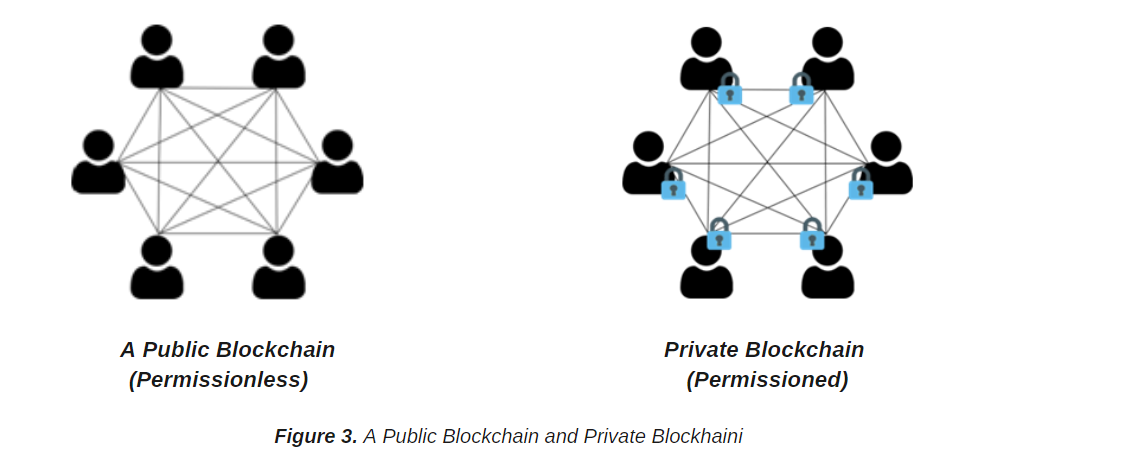
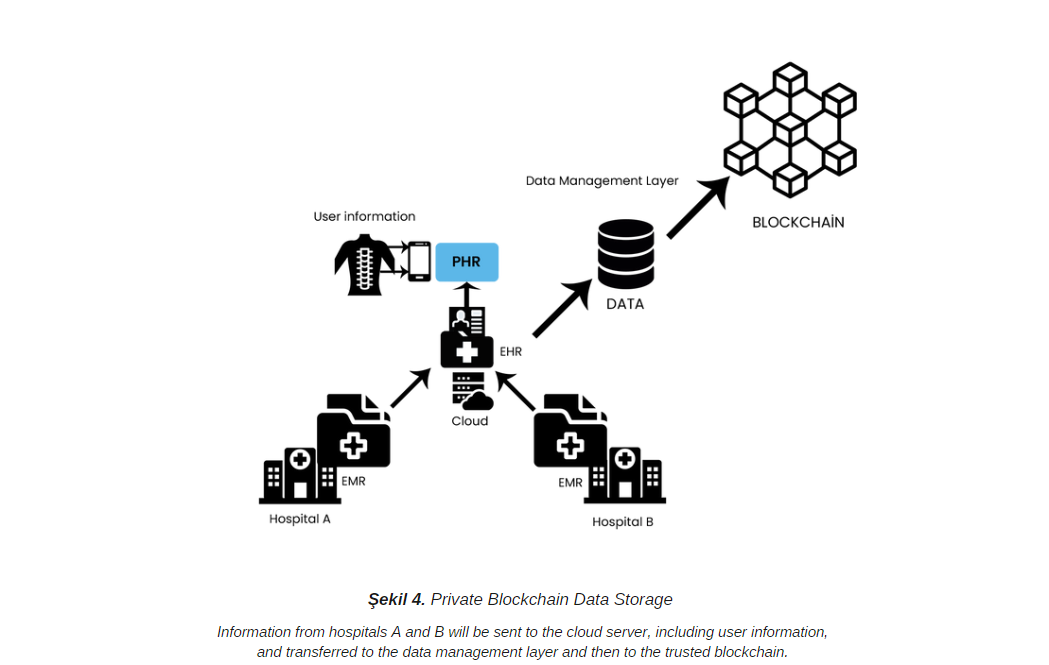
Efficient and secure processing of data in the healthcare system facilitates digital transformation and acts as a crucial factor for the convergence of physical and virtual spaces. Thus, taking transparent and correct decisions ensures that patient information is stored faster and more reliably.
Recently, wearable devices or medical IoT devices, personal health records, patients, doctors, and medical research have become valuable data sources. It will be stored securely thanks to its security private blockchain. Verifying the integrity of an individual transaction on a blockchain is inexpensive. A single piece of information is monitored in real-time. It can be used by the authorized user in the network. Consequently, no-cost verification would be economically viable.
Smart contracts play a vital role in blockchain operations. Smart contracts are programmable modules stored in a blockchain that is triggered when predetermined conditions are met. They can also automate a workflow by triggering the next action when conditions are fulfilled. Smart contracts automate the execution of a condition or a deal so all network nodes can be instantly notified of the result without the involvement of any intermediaries.
Clysterum is a cryptocurrency and a healthcare services project. As a cryptocurrency, Clysterum provides a platform for conducting, utilizing, managing, and exploring cryptocurrency transactions. We built Clysterum in recognition of the gaps in the healthcare sector amidst the rapidly advancing blockchain technology. Clysterum is a cryptocurrency created to address the shortcomings of the healthcare industry. The Clysterum team is always open to innovations and partnerships between users and healthcare workers, having adopted progress as their mission. Among our objectives is to get Clysterum recognized as a means of payment for health expenditures (hospital, pharmacy, optics, medical, etc.). Our team is aiming to develop joint projects with Non-Governmental Organizations (NGOs) to create a pool of aid and provide opportunities for those in need within the scope of social responsibility projects. Clysterum is a token established on the Ethereum network and is also developing its own mobile application and virtual card. Given these objectives and reasons, we believe that there is a need for the Clysterum token.
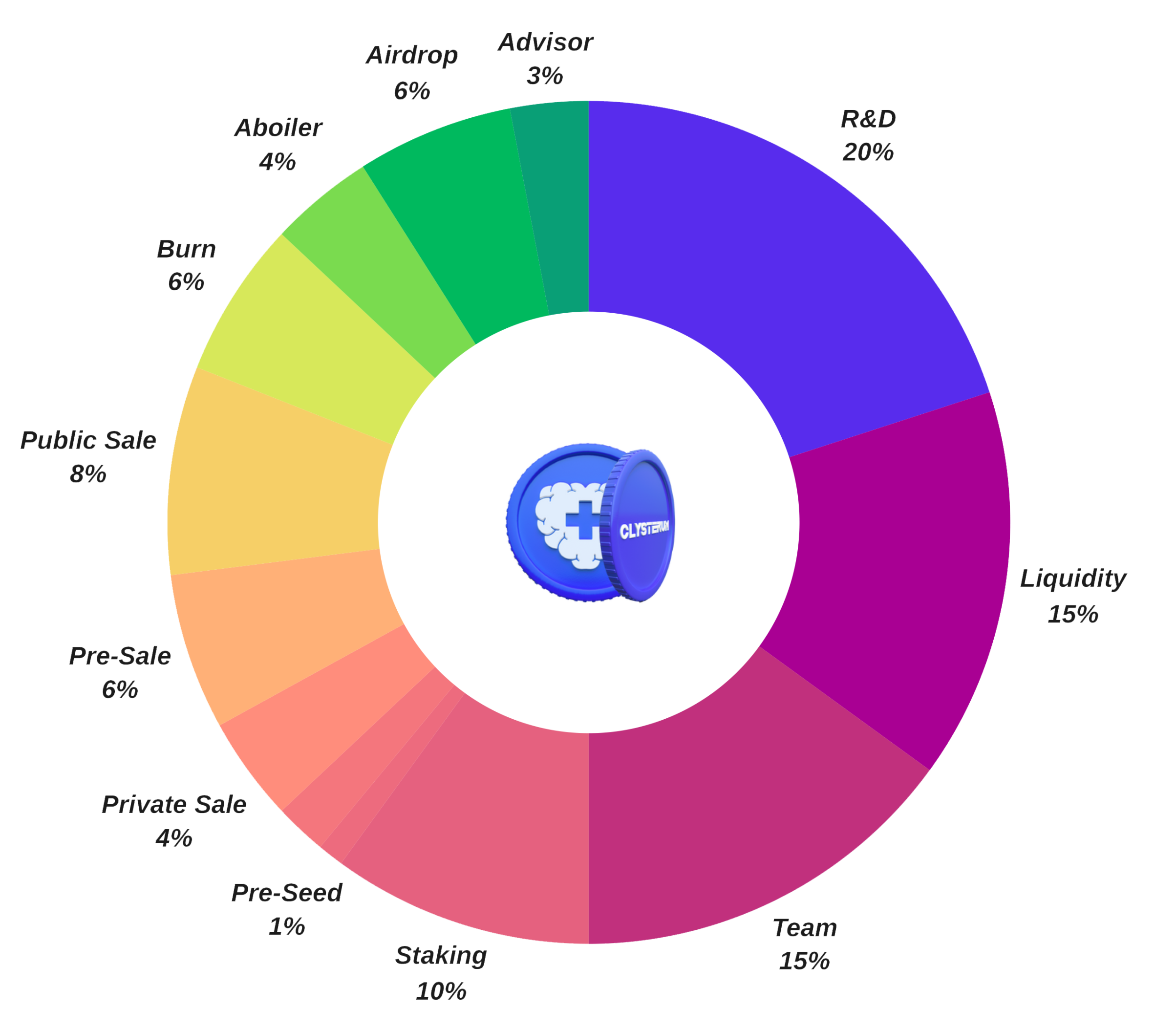
The Clysterum token has a supply of 5,000,000,000 (Five Billion). The distribution has been carried out based on the percentage slice as indicated below.
From the inception of the world's economic finance systems to today, many financial models such as Barter, Grain, and Metal Coins have developed and evolved, replacing the present-day credit cards or paper money. The continuously changing financial economy model will inevitably give way to cryptocurrencies, which are secure and decentralized.
The Clysterum Token will be used as a means of payment for health expenditures (hospitals, pharmacies, optics, medical, etc.). In addition to healthcare expenses, the locking feature will provide you with various savings options.
CLY Token holders can support the money chain by keeping their CLY tokens locked in their wallets for a specific period. Upon completion of this process, they will be subject to a stipend at weekly, monthly, or annual rates set accordingly.
The Clysterum staking method offers multiple stipend options.
Financial Stipend System:
It provides the opportunity to accumulate CLY tokens in return for staking.
Health Stipend System:
It covers a specific amount of essential health expenditures.
Plastic and Reconstructive Surgery Stipend System:
It covers a certain amount of the service that corrects shape and function disorders of congenital or acquired anomalies and improves body image.
According to the aid funds made by Clysterum users and companies, the treatment costs of deadly diseases such as Sma, Cancer, and Aids will be covered by the aid pool fund. The treatment expenses to be covered by the aid fund will be determined by the NGOs. A certain amount of the funds accumulated in the aid pool will be allocated to countries in need of aid, especially the African Continent, which has difficulty accessing basic health services. With the funds accumulated in the aid pool, we aim to solve the basic health problems of people as well as the health problems of animals. In line with the aims and objectives we have stated above, we aim to use a significant part of the aid pool for the health of our animal friends as well as the health of individuals. We believe that we can build a healthier world by increasing public health awareness in line with the goals and projects we have determined by acting with the awareness that this planet we live in does not belong only to us humans.
We will distribute CLY tokens to our valued users through airdrop by our vision. With this airdrop distribution, we aim to reach a certain audience and offer new opportunities to our participants. In this way, we offer a certain part of our advertising budget to our valued users. During the airdrop period, each user takes a maximum of 10,000 real steps per day and is entitled to 5 CLY tokens through the mobile application. When our users invite a relative for a healthier life, our valued users are given a virtual step. Functioning of the invitation system; Each inviting user will receive 16,000 virtual steps. 16,000 Virtual steps = 8,000 Real Steps. 8,000 Real Step will be equivalent to 4 CLY tokens.
We are happy to introduce you to the new modeling of the airdrop, which is distributed by the project vision you deserve for 10,000 steps, and its new name is the virtual step. The virtual step is a virtual version of the calories that the person's body mass index expends without moving in real life. This version is the progress payment given as a result of the calculation of the effort spent for the reference system based on the time spent in the virtual world. The virtual step is the number of steps given to you as a result of yourinvitation. The virtual step will be calculated 50% less than the Real Step. For example, the 1000 V.S. given to you = 500 R.S would be equivalent.
There is no doubt that artificial intelligence (AI) has become one of the topics with significant impacts in different fields. According to the Merr¡am-Webster dictionary, artificial intelligence is defined as "a machine's ability to mimic intelligent human behavior." The main subject of artificial intelligence is to produce new models and approaches that can enable smart activities. Typically, artificial intelligence relies on experiments, in which the researcher uses the computer system as a laboratory to verify hypotheses and run the test. Artificial intelligence can be more effective than humans at many tasks and can work 24/7 without fatigue and human error. It transfers data to users in a more transparent way. Artificial intelligence is related to a process of empowered thinking and data analysis.
It automates the manual health system where healthcare professionals carry out their routine work and duties. Artificial intelligence can operationally eliminate health problems in our daily lives. A few of them are listed below:
Artificial intelligence plays an important role in minimizing errors caused by human negligence in the health sector. For example; If the drugs of a patient who is forgotten to be cared for by a nurse are not given, the life of the patient may be in danger. Artificial intelligence monitors the patient and informs the nurse whether the drugs are given or not. It can speed up patient diagnosis, treatment, and clinical decision-making.
Artificial intelligence refers to the simulation of human intelligence in machines, such as computers or robots, programmed to mimic cognitive functions that humans associate with other human minds, such as learning and problem-solving.
Types of artificial intelligence are classified as general artificial intelligence, machine learning, and deep learning. Artificial intelligence is a broader term than machine learning and deep learning. Machine learning includes algorithms for various types of tasks, such as regression, clustering, and so on, and the algorithms must be trained on the data. Deep learning is a very young field of artificial intelligence based on artificial neural networks. Deep learning algorithms also need data to learn to solve tasks.
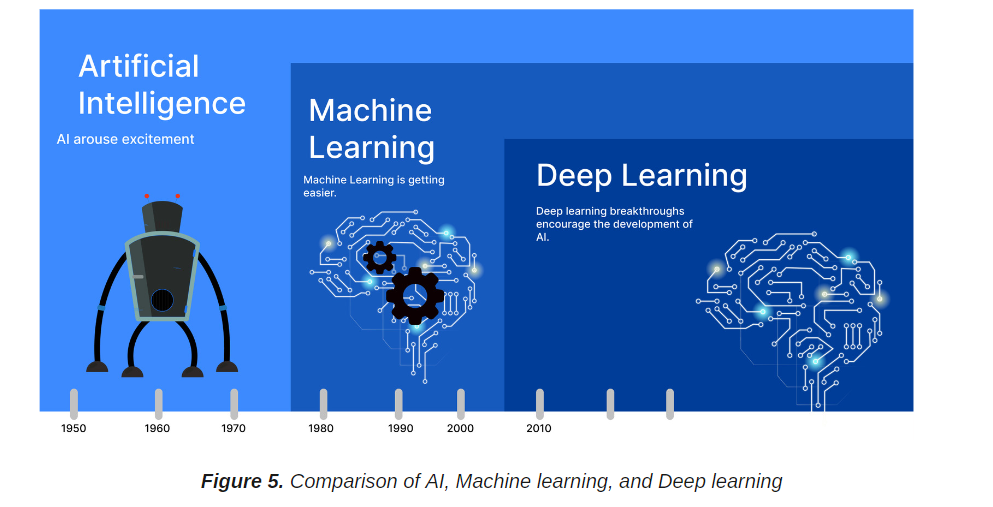
Artificial intelligence-based technologies are being integrated into our daily lives. According to the World Health Organization, 60% of factors related to individual health and quality of life are associated with lifestyle factors such as exercise, diet, sleep, stress reduction, abuse of substance-based drugs, or entertainment. AI-powered technologies and applications can now provide day-to-day lifestyle interventions, reminders, and referrals based on individual vital signs through digital devices. Artificial intelligence-based technologies in health institutions; it is set to enable the health system to operate, optimize, significantly transform the way they interact with patients, and provide care services to improve the overall efficiency of patient outcomes.
Artificial intelligence is expected to facilitate the diagnosis of patients with certain diseases. The number of people who died worldwide due to the side effects of medical treatment was 94,000 in 1990, and 142,000 in 2013.
In 2000, the Institute of Medical reported that an estimated 44,000 to 98,000 people die each year from preventable causes and 1,000,000 are seriously injured each year due to medical errors in the United States. In the UK, a study from 2000, found that around 850,000 medical errors occur each year, costing more than 2 billion pounds in additional costs. Therefore, the use of artificial intelligence-based technologies in various healthcare fields can help reduce human decision errors.
Artificial intelligence can be used to achieve the ideal care, it can help to ensure quality care and achieve significant savings in medical costs. Worldwide, the life expectancy of people over the age of 60 is increasing and treatment processes cause high costs.
Outbreaks of epidemic diseases cause a large number of people to get sick and increase the demand for health care. Government or private institutions that provide health services must offer a certain quality of service. Considering the capacity of health institutions, ceaseless efforts are expected from doctors and health workers, with all the difficulties of this situation. In this case, it becomes inevitable to benefit from artificial intelligence technologies due to the increasing number of patients, limited manpower, and costs.
For artificial intelligence to be applicable, sufficient data must be collected and analyzed. Therefore, it is necessary to establish a legal framework for access and sharing. To improve AI performance, real-time information gathering, sharing and data need to be accurate. The quality and accuracy of the data are very important, the higher the data quality, the lower the risk of artificial intelligence and the higher its efficiency. Collecting qualitatively accurate and realistic data is vital. Public participation should be encouraged for the development of medical artificial intelligence.
The Internet of Things (IoT) is widely adopted in many applications that are growing in importance in our daily lives, it is a modern technology with which various physical and virtual devices can communicate and connect over the internet, usually without human intervention. The term IoT refers to the modern proliferation of Internet-enabled devices with embedded computing capability. It is used to detect and collect various information about the physical environment around us, solve our daily problems, and make our lives easier. The IoT health monitoring system is advancing in the early detection of medical problems, emergency notifications, and other health issues. Smartphones have become indispensable to our daily lives, and they are connected to sensors to monitor our health. The IoT healthcare system provides efficient monitoring that helps improve resource management.
All IoT devices are connected to a single central server. That's why the center IoT architecture faces many challenges. These challenges stand as an obstacle to the future development of IoT devices. (For example, if the server goes down, a single point of failure can affect the service quality and availability of IoT devices.) All data generated from IoT devices is stored in one place, making it a desirable clear target for many attackers. Because it contains sensitive and personal information, the data is kept in one place on a remote server, under the full control of a third-party provider, so the protection of data privacy seems doubtful. Moving IoT to Private Blockchain technology would be the right decision.
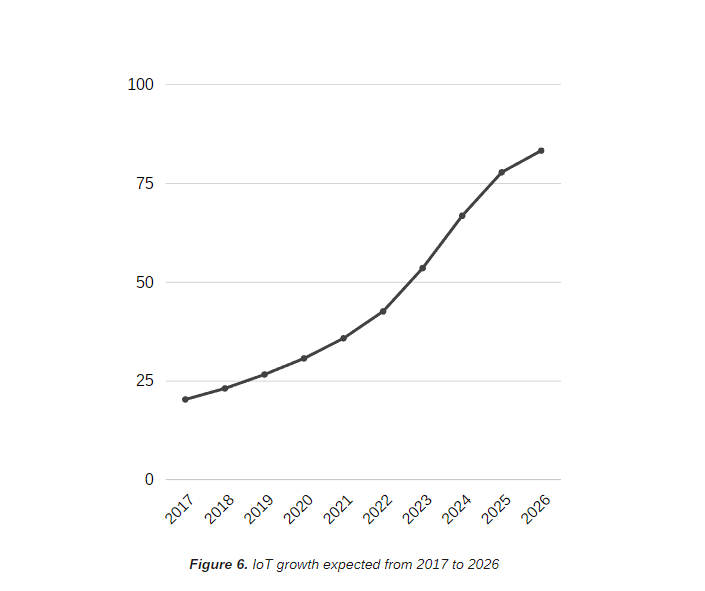
IoT is a growing technology in the internet environment with real-time connected objects. It is popular in many fields because of its touch from a simple object to a smart object. It has an impact on clinic service for health monitoring, patient management, and patient physiology. Patients are connected with sensors and data is associated with controllers, then transmitted to a health monitoring unit.
Advanced technologies in healthcare allow for closer monitoring of the care of both inpatients and outpatients. Remote patient monitoring allows you to monitor and treat vital signs without having to be in the same place as the patient. The device used depends on the patient’s health (e.g. Heart device, Glucose meter, etc.). The device collects the requested data. If the values are not as desired, the data are forwarded to the database for registration and the treating doctor. Doctors analyze patient information in real-time and can intervene in it. Such devices may become more common and help eliminate the length of hospital stay and avoidance of complications.
Thanks to wearable medical devices, it allows the person to follow their vital signs in real time. Medical devices not only record data but can also help with immediate intervention in commands or problems you are currently experiencing.
 |
|